2024 IMPACT REPORT

Reflecting on this transformative year at NumFOCUS, I am sincerely grateful. 2024 has been marked by meaningful growth and a renewed commitment to our mission of serving the open source projects and communities that continue to revolutionize science.
Throughout this year, we've continued to scale our impact while sharpening our operations to support our community with greater efficiency and clarity. We welcomed new projects, strengthened governance, and deepened our community ties while maintaining our focus on the people who drive this work forward.
Our project portfolio expanded in scope and impact. We welcomed innovative projects like Parsl, whose parallel programming capabilities are advancing work in astrophysics, biology, and materials science, and Dynare, which is simplifying economic modeling for social scientists. Our established projects also reached impressive milestones: Astropy's first paper surpassed 10,000 citations, a testament to the community of over 500 contributors.
Today, the NumFOCUS family includes 62 Sponsored and 93 Affiliated Projects—I invite you to explore their stories in this report.
Letter from our Executive Director:
Leah Silen
-
2024 also marked a turning point in our governance. In response to community feedback, we implemented a new two-body leadership model: an Administrative Board and a Technical Steering Committee. This structure ensures that projects have a direct voice in governance and that we remain fiscally healthy and legally compliant. The creation and success of our community-led Election Committee was a significant highlight, ushering in a more equitable and transparent board election process that saw 11 new leaders join our governance bodies in 2024.
Our revised Code of Conduct, set to take effect in early 2025, represents countless hours of community input and collaboration. Created through feedback gathered at Project Summits and refined by dedicated volunteers and staff, it establishes clear processes that support our commitment to inclusive spaces and a new Working Group to manage reports.
One of my highlights this year was the Annual NumFOCUS Project Summit in Cambridge, Massachusetts. Bringing together project leaders, staff, and supporters to collaborate and connect in person is always powerful, and this year was no exception. I encourage you to read Co-Chair Inessa Pawson's reflections for an inside look.
Ahead of the Summit, I shared with our community that my tenure as Executive Director would conclude in the coming year. It's been a tremendous honor to lead this organization and witness the extraordinary growth of the open-source scientific software ecosystem. I've had the privilege of supporting those on the frontlines of innovation, and the joy of working alongside a community united by a shared purpose and values.
NumFOCUS, at its core, has always been about the people: the maintainers and contributors, the staff and volunteers, the users and researchers, the advisors and donors who give generously of their time and resources. You are what makes this organization exceptional.
As I look ahead to the next chapter, I take immense pride in what we've built together. Thank you for being part of this journey. I hope you will read on to learn more about our accomplishments this year and find, as I do, deep inspiration in the stories of this incredible community.
With gratitude and admiration,
Leah
Project First
NumFOCUS was founded to support open source scientific computing projects and the communities that sustain them. In 2024, we began putting more intention behind what we call our Project First approach—shaping our work so that the perspectives and priorities of our projects guide how we grow and adapt. This reflects our belief that projects are more than tools or codebases; they are communities of people who share their time, expertise, and passion to maintain essential infrastructure for science and research. As part of this shift, we introduced an updated governance structure with two branches: a Board of Directors serving as the administrative branch, and a Technical Steering Committee (TSC) focusing on the technical and community needs of our projects. Our hope is that these changes create clearer pathways for input, foster collaboration, and help us respond more effectively to evolving needs. Throughout this report, you’ll see how these ideas are taking shape in the ways we amplify project voices, improve services, and build shared ownership of our mission.
Community Driven Governance
Building on our Project First approach, our updated governance model is designed to ensure that projects have a meaningful voice in the decisions that shape NumFOCUS. The structure brings together two branches—the Board of Directors (Administrative Branch) and the Technical Steering Committee (TSC)—each with distinct but complementary roles. The Administrative Branch defines strategic direction, approves final budgets and quarterly reports, oversees legal and financial matters, guides fundraising, assesses organizational risk, and forms committees such as the Code of Conduct Working Group and the Election Committee. The TSC provides technical insight and community perspective, oversees relevant committees and their budgets—such as the Infrastructure Committee, Affiliated Project Selection Committee, and Small Development Grants Committee—approves preliminary budgets, supports technical content development, and ensures that programs are grounded in the lived realities of project communities. We also redesigned our election process so that projects can directly nominate and vote for candidates, ensuring their voices are both heard and represented at the highest levels. Transparency is central to this process, helping to build trust and reinforce accountability. With governance led by the projects themselves—not funders or external stakeholders—we aim to strengthen the open source ecosystem by empowering those who build, maintain, and depend on it every day.
As a leader in open source-inspired governance, NumFOCUS also continues to set the standard for comprehensive project support. In 2024, we scaled our services to better meet the needs of our growing ecosystem while deepening our commitment to existing projects. While many foundations offer legal and financial assistance, NumFOCUS goes further—providing operational, infrastructure, governance, and community support that is truly unparalleled.
This year marked several major milestones in how we serve our projects. We hired our first-ever Project Resource Mobilization Lead, a dedicated fundraiser who works directly with projects to support their fundraising efforts—an offering rarely found in other organizations. We also welcomed our first IT DevOps Engineer, focused on supporting infrastructure needs and collaborating with the Infrastructure and Security Committees to implement critical technical initiatives.
In addition, we launched a new Project Support Portal, giving projects streamlined access to the full range of services we provide—from compliance and fiscal management to event planning, cloud infrastructure, and beyond.
Our support goes well beyond the basics. Whether helping projects organize community events, find and secure grants, or maintain secure and reliable infrastructure, we are committed to a holistic approach that supports both the technical and human aspects of project sustainability. This dedication to serving the people and communities behind our projects is what sets NumFOCUS apart.
Enhanced Project Support


Small Development Grants
In 2024, we continued to fund the critical, often overlooked work that keeps open source projects healthy and sustainable. This year, we funded 33 Small Development Grant proposals totaling just over $290,000, and officially funded over $1 million since the program’s start.
The Small Development Grants (SDG) program supports initiatives that are typically too small, too routine, or too technical to attract attention from traditional funders or sponsors. These grants fill an essential gap, supporting work that may not be flashy but is foundational to project maintenance and progress. For many projects, SDGs also help cover needs that fall outside the scope of individual donations.
Over the years, this program has funded a wide range of impactful initiatives, from infrastructure upgrades and bug fixes to community documentation and translation efforts. From its inception, the program has funded the project initiatives below.
This year, we also took a step back to evaluate the SDG program to ensure it continues to meet project needs. Through a combination of feedback surveys, an open GitHub discussion, and direct dialogue with project representatives at our annual Project Summit, we gained valuable insights from both grant recipients and the community volunteers who facilitate the program.
Thanks to this input, we are preparing to roll out a set of improvements in 2025. These include a more accessible and equitable selection process for applicants and updates designed to reduce the burden on volunteers who help manage the program. These changes reflect our ongoing commitment to ensuring that project support is community-informed, sustainable, and responsive to the real-world challenges our projects face.
2024 Small Development Grants

Projects
The NumFOCUS ecosystem continued to grow in 2024, welcoming five new Sponsored Projects and 13 new Affiliated Projects into our community. Each of these additions reflects the trust that open source projects place in NumFOCUS to provide the operational, financial, and community support they need to thrive.
Our goal is to handle the behind-the-scenes work—fiscal sponsorship, infrastructure support, governance assistance, and more—so that projects can focus on what matters most: developing impactful tools, engaging their communities, and driving innovation in scientific computing.
We’re proud to share just a few highlights from our projects this year, showcasing the depth, diversity, and momentum of the work being done across our growing network.
Sponsored Projects
Check out the work accomplished by our projects this year to see innovation, discovery, and scientific collaboration at work.




























Affiliated Projects
View the work done by our Affiliated Projects in 2023, showcasing more work in open scientific discovery. Click on a project logo below to learn more about our Affiliated Projects and their work in 2023.
















2024 Project Summit
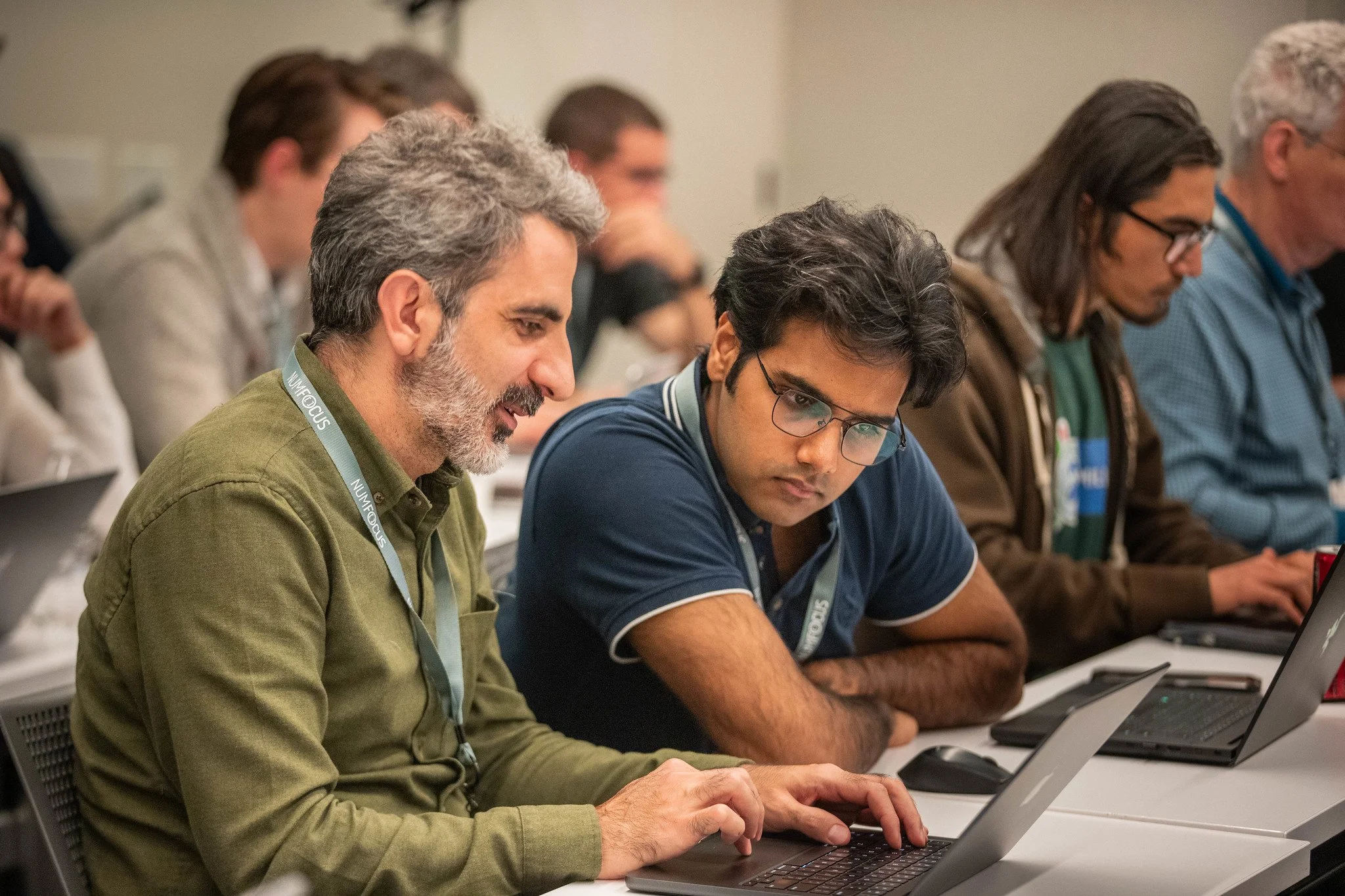
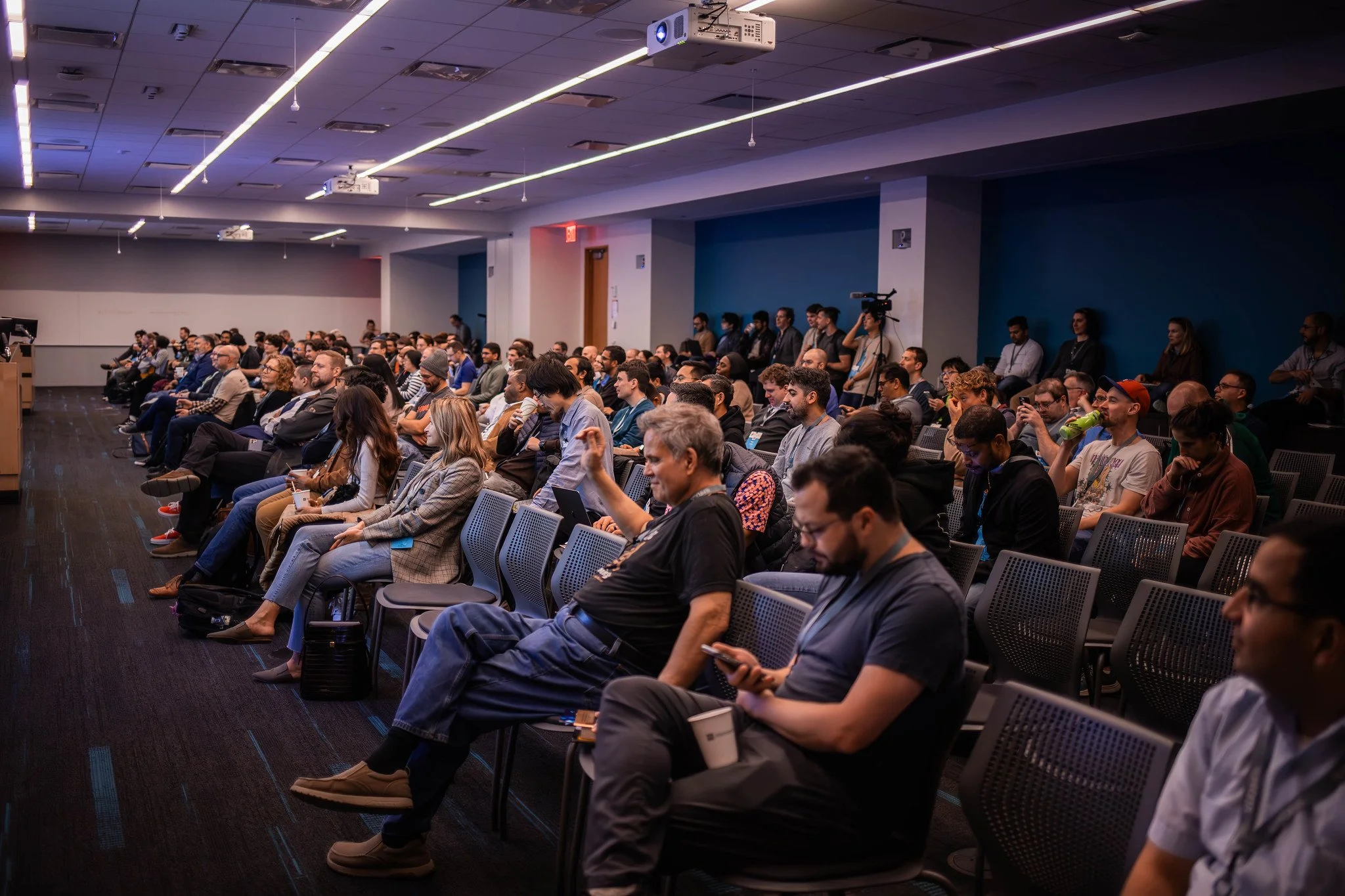
The 2024 Project Summit, held at Microsoft’s New England Research & Development (NERD) Center in Boston, Massachusetts, brought together representatives from NumFOCUS Sponsored and Affiliated Projects for a focused day of connection, collaboration, and strategic conversation.
Held as part of our ongoing effort to strengthen communication and shared ownership across our ecosystem, the summit provided a space for project leaders to engage directly with NumFOCUS staff, board members, and one another. The goals of the summit were to gather feedback on key programs, foster cross-project learning, and ensure that our organizational priorities remain aligned with the needs of the communities we serve. Through open discussions, working sessions, and collaborative planning, the summit helped shape upcoming initiatives, including improvements to project services, refinements to the Small Development Grants program, and enhancements to governance processes. The event exemplified our Project First approach and reinforced the vital role projects play in guiding the future of NumFOCUS.
Reflections on the 2024 NumFOCUS Project Summit:
Highlights and Insights
By Inessa Pawson
As I look back on the 2024 NumFOCUS Project Summit, what stands out is the depth and complexity of the discussions that ripple outward, shaping the larger scientific computing ecosystem. There is, too, a certain gravity in being an organizer of such events, to know that the stage we set is a dialogue that drives scientific progress on a global scale. For the past two years, Sanket, Arliss, and I have taken that responsibility to heart, building on the feedback from the previous summits and aiming to raise the bar, not just for logistics, but for meaning and impact.
One of the Summit program features we introduced in 2023, which continues to be a success, is the lightning talks. This is an opportunity for attendees to highlight the work of their teams and share perspectives on common challenges in developing open source projects with their peers in the NumFOCUS community. For 2024, we chose two themes:
1. how to strike a balance between fostering an inclusive project culture while upholding project vision and managing technical debt, and
2. new approaches and best practices for automating the work related to scientific research and software development.
Over the course of two days, we were not only treated to deep insights, fresh perspectives, and useful tips on these topics but also an opportunity to expand our collections of favorite memes.
This year, we also hosted a "Hot Topics" session to dive deeper into the important conversations that have been circulating within the community for the past 12 months. The energy in the room during this session was palpable at times; it was a great reminder of the diversity of perspectives that shape the NumFOCUS community. It also underscored the importance of providing various platforms for all voices to be heard. Now, a month after the Summit, observing how all these discussions are taking root, I feel reassured about the strength of the NumFOCUS community. I'm especially excited about the progress made in the upcoming elections, which will introduce a new NumFOCUS governance structure, new fundraising initiatives, and the support of the broader community for the newly established NumFOCUS Code of Conduct Working Group.
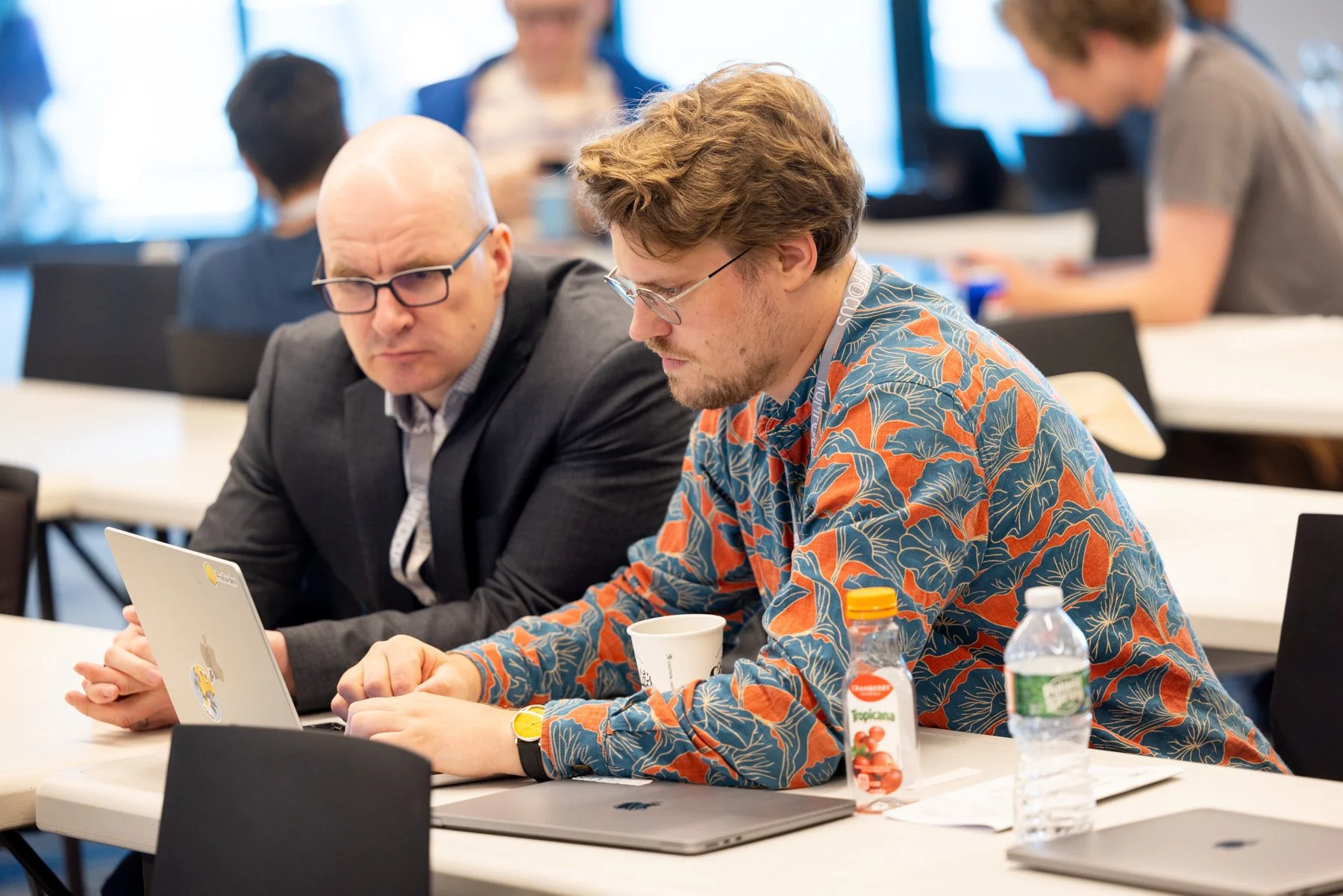
Sprints were another activity we introduced to the Project Summit this year. Long a staple of SciPy Conference, sprints are both productive and oddly therapeutic — like cleaning out a drawer you've been avoiding with your peers. They gave participants a chance to finally tackle those thorny issues and collaborate across project lines. I, too, found myself taking full advantage of both opportunities. I hope sprints will become a permanent fixture of the Summit program.
My reflection on the 2024 NumFOCUS Project Summit wouldn’t be complete without mentioning a growing presence of Generation Z amongst key contributors to the NumFOCUS projects. Engaging with the younger generations is essential for the sustainability of open source and open science. And in this regard, it appears that the NumFOCUS community is leading the way.
This year’s Summit was also bittersweet for many, as we received the news of Leah Silen’s departure. Leah has built this organization from the ground up. The culture of collaboration, inclusivity, and empowerment that the NumFOCUS community is known for is a direct reflection of her leadership. As we stand at the close of this chapter, with the firm foundation built and the relentless drive of this community, I am optimistic that NumFOCUS will continue to thrive, empowering pioneers and champions of open science.
ACKNOWLEDGEMENTS: I’d like to express my deepest thanks to Sanket Verma and Arliss Collins, whose tireless efforts as co-organizers of the 2024 Project Summit have been key to its success. This event would not have been possible without the support of the entire NumFOCUS team, who stood behind us every step of the way and went the extra mile a few times too. And finally, a special note of appreciation to the Microsoft New England Research and Development Center for providing us with a venue that matched the spirit and impact of the gathering itself.

Community Leadership
In 2024, NumFOCUS committees played a vital role in advancing the organization’s mission and ensuring community and project voices were embedded in our work. By engaging a diverse mix of volunteers and stakeholders, our committees provided crucial leadership, supported strategic decision-making, and strengthened the connection between our community and organizational operations. Their contributions were key to the progress we made this year in project first service, transparency, and collaboration.
-
The number of Affiliated Projects continues to grow, thanks to the APSC. This year, the committee reviewed 36 applications and helped bring on six new Affiliated Projects.
2024 Committee Members:
Florian Roscheck, Paul Anzel, Filipe Fernandes, Rocco Meli, Vyas Ramasubramani, Andre Leon Sampaio Gradvohl, Richard Gowers, Christopher Siefert, Mert Bozkir, Florian Rathgeber, Sathvik Bhagavan, Venkateshprasad Bhat, Steven Kell, Stefan Krastanov, Saransh Chopra
-
The DISC Committee continues to build a more inclusive and equitable scientific software community. In 2024, the committee focused on strategic outreach and planning for the upcoming DISC Unconference 2025, while laying the groundwork for a new DEI online course and mentorship program.
2024–2026 Committee Members:
Anita Ihuman, Emma Saroyan, Eloisa Elias Tran, Kamila Stepniowska (Staff), Kweyakie Blebo, Melissa Mendonça, Rashid Mvk (Ex-Secretary, former committee member)
Committee members are elected for two-year terms with an option for unlimited renewals. The following volunteers are serving the 2024–2026 term which began on April 30, 2024.
-
Small Development Grants Committee
The Small Development Grants Committee helped fund over $290,000 to projects in 2024. This volunteer-led group brings technical insight and an understanding of community needs to every grant cycle.
2024 Committee Members:
David Pérez-Suárez (Co-chair), Pamphile Roy (Co-chair), Jelena Milosevic, Brian Skinn, Kalyan Prasad, Magdalena Wiercioch, Mridul Seth, Robert Coup, Ashley Pace, Lilith Hafner, Nizam Uddin Syed, Smit Lunagariya
-
The Open Source Science Initiative accelerated in our mission to connect users of open source research software with the development teams behind that software.
Development of the Map of Open Source Software (MOSS) began, supported by ongoing interest group calls in Healthcare and Life Sciences, Climate and Sustainability, and Chemistry. MOSS is an interactive, composable map of open-source research software that lets you explore the following five key questions:
Which open-source scientific software tools are available in any given domain?
Which tools produce what published research?
Who are the people behind both the papers and the tools?
Who funds development and maintenance of these papers and tools?
Which nodes in the system produce the greatest impact as defined by the user?
Learn more about MOSS and view some demos of the prototype at https://map.opensource.science
In September, we launched “Spotlight,” a new series where we present science-related OSS tools and the people and stories behind them. We want the series to shine a light on how open-source scientific software “gets done” while highlighting the outstanding tools that exist in the open-source research software ecosystem. The first three Spotlight posts were published in 2023, and we’re looking forward to seeing many more in 2024.
The team also connected with practitioners and developers at over 40 conferences and meetups around the world!
We look forward to next year as we continue MOSS development, expand our interest group support, and refresh our communications material including our website. For now, check out our Medium or subscribe to our newsletter for information on how to get involved with OSSci!
-
In 2024, the NumFOCUS Security Committee continued its work to strengthen the overall security of our project ecosystem. The committee responded to emerging threats, supported projects in improving their security practices, and promoted the use of tools like OpenSSF Scorecards. They gathered community feedback through surveys and discussions, shared best practices, and provided resources to help projects address common challenges. The committee also began developing more accessible and scalable processes to support both fiscally sponsored and affiliated projects, setting the stage for expanded impact in 2025.
2024 Committee Members:
Andy Terrel, Nabil Freij, Irfan Alibay, Mridul Seth, Katrina Riehl
-
Throughout the year, the Infrastructure Committee focused on optimizing and managing NumFOCUS’s technical resources and infrastructure. Key efforts included auditing cloud and server assets to reduce costs, advancing the migration and consolidation of cloud accounts, and supporting projects with infrastructure needs such as continuous integration and deployment (CI/CD) improvements. The committee also played an active role in recruiting and onboarding new members, refining operational processes, and collaborating closely with staff and community stakeholders to ensure reliable and efficient infrastructure support across the organization.
2024 Committee Members:
Joe Lucas, Reshama Shaikh, Pamphile Roy, Juanita Gomez, Adelin Travers
Community Education & Outreach
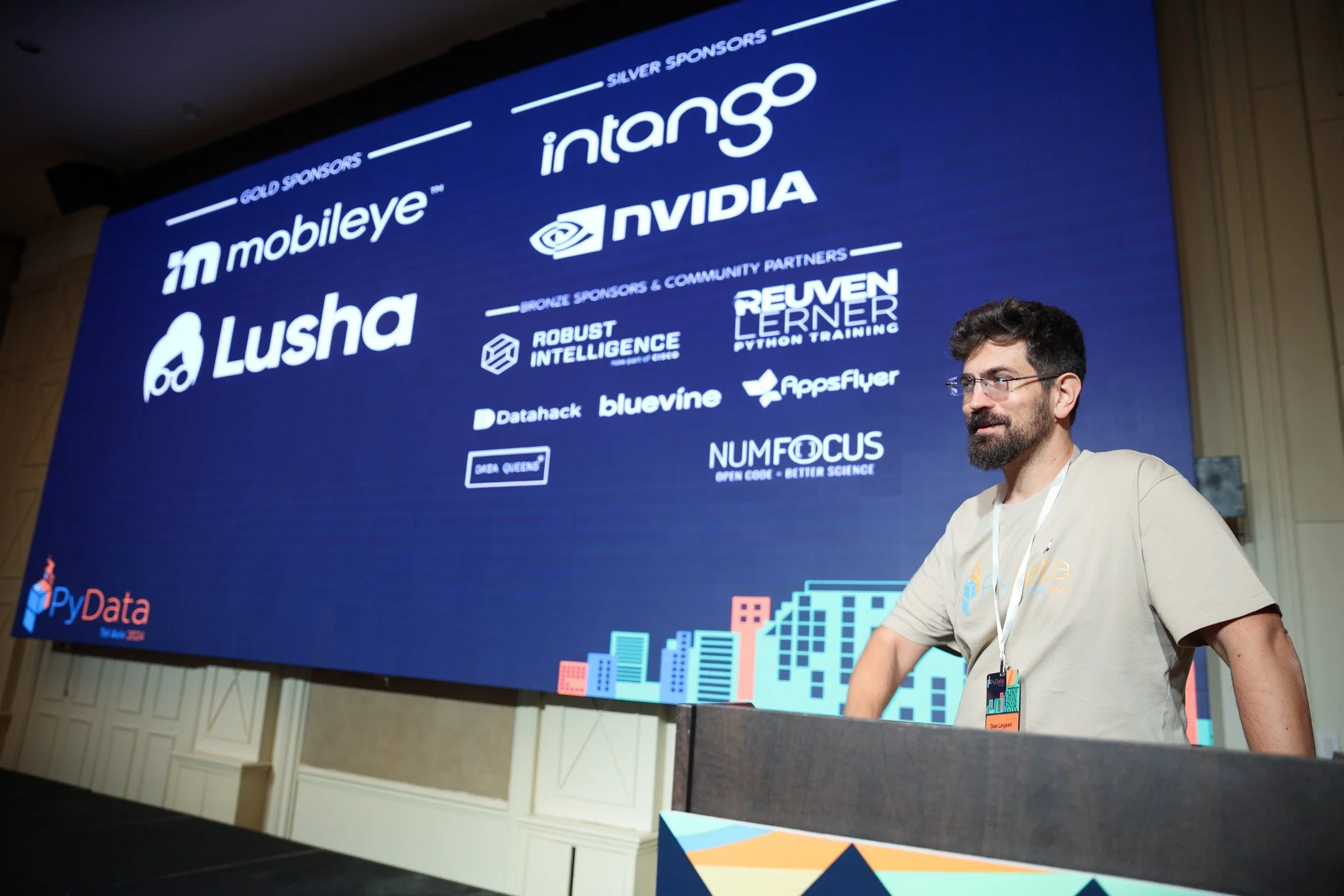
In 2024, NumFOCUS’s educational events continued to serve as powerful platforms for community building, knowledge sharing, and visibility for open source scientific computing. PyData conferences brought together hundreds of contributors, users, and stakeholders from around the world to exchange ideas and showcase project impact. Our support of community events further amplified the visibility of our projects and values. Across all formats—virtual, in-person, and hybrid—our events fostered meaningful connections, elevated diverse voices, and strengthened the sense of shared purpose within the NumFOCUS community.
PyData continues to be the foundation of our global education and community programs. In 2024, PyData events brought together thousands of practitioners, researchers, and contributors from around the world to learn, collaborate, and advance the field. By connecting cutting-edge topics like Generative AI, LLMs, MLOps, deep learning, data visualization, and ethical tech with the open source tools that power them, PyData continues to shape the future of data science.
PyData Events
Attendees: By the Numbers
Project-led events and community gatherings flourished in 2024 with active support from NumFOCUS, reflecting our belief in the power of local and project-specific engagement. We offered financial assistance, logistical coordination, and communications support to help projects host developer sprints, workshops, conferences, and informal meetups. These gatherings created opportunities for in-person collaboration, strengthened contributor relationships, and brought new voices into the open source ecosystem. By reducing barriers to organizing and participating in these events, we enabled projects to grow their communities organically and celebrate the diverse people who power scientific computing around the world.
Project & Community Events
NumHACK (Nov. 22–24, 2024)
NumHACK was a virtual hackathon designed to innovate and collaborate across the open source scientific computing community. Participants came together to tackle challenges, contribute to projects, and connect with mentors and peers from around the world. Organized by a committee made up of PyData Global Impact Scholarship recipients, NumHACK provided workshops, team hacking sessions, and lightning talks to build new skills, explore unfamiliar technologies, and tackle challenging problems.
Impact Scholarship Program (Dec. 5–6, 2024)
The NumFOCUS Impact Scholarship Program provided financial support and dedicated mentorship to individuals from underrepresented backgrounds in scientific computing, enabling them to attend PyData Global. Scholars participated in a two-day virtual pre-conference orientation and networking event to connect with mentors and prepare for the main conference experience.
FEniCS 2024 (June 12–14, 2024 | Oslo, Norway)
FEniCS 2024 brought together users and developers of the FEniCS Project in Oslo, Norway, for three days of talks, tutorials, and poster sessions focused on automating computational mathematical modeling. The conference highlighted the latest advancements in FEniCS software and its applications in scientific and engineering domains while growing connections for the FEniCS community.
JuMP-dev 2024 (July 19–21, 2024 | Montreal, Canada)
JuMP-dev 2024 was a technical workshop for JuMP, the modeling language for mathematical optimization in Julia. Hosted in Montreal, the event provided an opportunity for users and developers to collaborate on the evolution of JuMP and related tools, share research, and discuss future directions. Emphasizing community feedback, JuMP-dev created more engagement opportunities with Julia’s optimization software.
MDAnalysis User Group Meeting (Aug. 21–23, 2024 |
London, UK)
The 2024 MDAnalysis User Group Meeting in London welcomed users, researchers, and developers of the library for molecular dynamics simulations. Through tutorials, talks, and discussions, the meeting allowed users to share their thoughts, learn new techniques, and provide thoughts on the project's future. The event highlighted the project’s commitment to usability, reproducibility, and community-driven development.
scverse Conference 2024 (Sept. 10–12, 2024 |
Munich, Germany)
The first scverse Conference 2024 brought together the single-cell omics community in Munich to work with the suite of open source tools in the scverse ecosystem. The conference featured scientific presentations, technical tutorials, and community discussions, exploring how interoperable, Python-based software can innovate biological discoveries.
PETSc User Meeting (May 23–24, 2024 | Cologne, Germany)
The 2024 PETSc User Meeting brought together researchers, developers, and engineers from academia and industry to discuss applications of the Portable, Extensible Toolkit for Scientific Computation (PETSc). Hosted in Cologne, Germany, the event featured technical presentations, tutorials, and interactive discussions with the PETSc user community and showcased the software’s role in high-performance scientific computing.
JuliaCon 2024 (July 10–12, 2024 | Eindhoven, Netherlands)
JuliaCon 2024 brought together the global Julia community in Eindhoven for three days of vibrant exchange on numerical computing, data science, and high-performance applications. With keynotes, technical talks, workshops, and community gatherings, the conference highlighted the versatility and growth of the Julia language.
Bioconductor Conference (July 24–26, 2024 |
Grand Rapids, MI)
The Bioconductor Conference 2024 (BioC2024) provided opportunities for the bioinformatics community to explore tools for genomic data analysis using R and Bioconductor. Held in Grand Rapids, Michigan, the event had keynote talks, workshops, and poster sessions highlighting the latest scientific contributions, educational resources, community involvement, and accessibility.
StanCon 2024 (Sept. 10–12, 2024 | Oxford, UK)
StanCon 2024, held at the University of Oxford, was a major event for the Bayesian modeling and statistical computing community. The conference featured talks and tutorials about Stan, with contributions from researchers, educators, and practitioners, highlighting real-world applications and advancements in probabilistic programming.

Behind our community is the infrastructure that supports it, and in 2024, NumFOCUS laid the groundwork for large-scale updates to continue advocating for our projects.
Advocacy
A New NumFOCUS Code of Conduct
In 2024, we began updating the NumFOCUS Code of Conduct. The process was driven by community collaboration to provide better frameworks and direction on how to handle conduct reporting.
Following months of open feedback, drafting, and review, the updated Code of Conduct was formally approved by the NumFOCUS Board of Directors in December 2025. It went into effect on February 1, 2025, and is now supported by the newly formed Code of Conduct Working Group, which will oversee its implementation and continued evolution. Learn more here https://numfocus.medium.com/meet-the-new-numfocus-code-of-conduct-working-group-a38b40f40fc3


DISC Unconference 2025
The 2025 DISC Unconference, organized by the NumFOCUS Diversity & Inclusion in Scientific Computing (DISC) Committee, brought together 58 participants both in São Paulo, Brazil, and online from March 14–16, 2025. Focusing on expanding open-source participation in the Global South, the event led to six open-source projects addressing challenges such as international funding navigation, open mentorship, project connectivity, leadership in equity initiatives, language barriers, and organizing inclusive events. All materials were created under open licenses, allowing for accessibility to reuse and further development.
Solutions: https://github.com/numfocus/disc-unconference-2025
DEI Online Education Course
In support of community-led learning, NumFOCUS launched a call for contributions to help build a DEI education course and accompanying DEI Handbook.
The goal? To create accessible, practical resources that empower open source project leaders and contributors to cultivate inclusive, equitable environments. With contributions continuing into 2025, this work will serve as a lasting resource for our entire ecosystem.
Mentorship Program Development: JADES
In 2024, NumFOCUS began developing a new mentorship initiative called JADES (Justice, Access, Diversity, Equity, and Sustainability). While still in its conceptual phase, JADES is being built to create long-term goals and sustainability.
OSSci: Advancing Collaboration and Innovation in Open Research Software
In 2024, OSSci led several impactful initiatives to strengthen the connections between open source, open science, and industry. At the heart of this work was the Impact of Research Software Open Innovation Sprint, which brought together community members to co-develop practical tools, including a prototype for a software mentions tracker and new utilities to improve the adoption of codemeta.json and other metadata standards. These collaborative efforts helped lay the groundwork for more robust and discoverable research software.
OSSci also launched and hosted several cross-disciplinary communities to foster innovation and domain-specific progress. The AI in Science roundtable facilitated rich dialogue across research domains, while the Chemistry and Materials Science roundtable gathered stakeholders to address shared challenges in those fields. A targeted innovation sprint focused on Energy, Climate, and Environment convened participants to identify and begin addressing key priorities within those areas.
Progress continued on the Map of Open Source Science, with a proof-of-concept prototype successfully developed and tested locally. This foundational step sets the stage for future expansion and broader community engagement.
Looking ahead, OSSci is preparing to expand its collaborative network by exploring new initiatives in the fields of Quantum and Life Sciences. Each of these efforts supports OSSci’s broader mission to foster knowledge-sharing, produce community-driven outcomes, and accelerate the development and impact of research software within the NumFOCUS ecosystem.


Support Network
Principle Corporate Sponsors


Sustaining Corporate Sponsors




Contributing Corporate Sponsors



Community Sponsors




Start-Up Partners

2024 Individual Donors
Jenny Zadeh
David Leitch
Timothy Triche
Alberto Hernández
Timothy Triche
Robert Love
wayne martin
Maximilian Freudenberg
Simon Norris
Mi Ma
Anna Gut-Gawron
Haily Johnson
RJ Santos
Tim Hargreaves
Douglas Davis
Steve Benbow
Francois Michonneau
Gretchen Graff
Reto Stauffer
Hon Chuen Mok
Hon Chuen Mok
Achim Zeileis
Joel Ager
W Cory Sherb
Paul Stark
RAVI KUMAR DEVAKI
Roshan Mu
Jose Maturana
Gonzalo Medina
CONG ZHANG
Zev Nicolai-Scanio
Thales Dos Santos
Thales Dos Santos
Thomas Henderson
Stephen Kaluzny
Christian Brædstrup
Bang-Shiuh Chen
Martin Fenner
Siva Sivananthan
Bruno Quinart
Hamoud Albusaedi
Guilherme Castelao
Hamoud Albusaedi
William Belk
Filipe Direito
Petr Krysl
Amir Meshkati
Hon Chuen Mok
Hon Chuen Mok
Steve Benbow
Joe Hamman
Itidal Almutairi
Alex Wolf
Marc Repnow
Thomas Foley
Hans Johnson
Cedric Bouysset
Ferdoos Hossein Nezhad
Namir Oues
Saleh Alyemni
Kiran Gangarapu
Matteo Degiacomi
Antonia Mey
Valerij Talagayev
Lexin Chen
Rafael Tapia Rojo
Daniel Bosch
ozge ozkilinc
Michael Thoreau
sinem bektas
Daniel York
Alessandro Principi
Colin Macdonald
Alessandro Pandini
Kira Fischer
Qiongju Qiu
Henrik Stooß
Simon Holtbrügge
Cerys Cormican
Hannah Pollak
Shivani Grover
Richard Warg
Nils Niggemann
Amir Montazery
Madeline Grubbs
Xinbo Lu
Robert Lucente
Anton Evdokimov
Carla Adamson
Alexandru Mihai
Madeline Grubbs
Karl Bagdal
Peter Simon
John Cook
Jon Nordby
John Haney
Kipton Barros
Nicolo Pitsch
Murray Sondergard
Vishnu Murali
Jiaqi Zhu
Doron Behar
Carla Adamson
Mark Tenney
Edward Hyer
Napaporn Kareeklin
Financials
Revenue
-
Corporate Donations
Project Restricted: $437,694
Program Restricted: $116,000
Unrestricted: $867,470
Individual Donations
Project Restricted: $100,050
Unrestricted: $75,446
-
Project Restricted: $2,713,860
Program Restricted: $90,736
Unrestricted: $15,000
Google Season of Docs: $74,300
Google Summer of Code: $1,200
-
NumFOCUS Events: $1,651,904
Project Events: $446,904
Total Events: $2,098,80
Fiscal Sponsorship and Grant Fees: $453,572
Service Agreements:
NumFOCUS: $247,477
Project Restricted: $734,348
-
NumFOCUS: $247,477
Project Restricted: $171,402
-
Restricted (Program/Project): $4,679,757
Unrestricted: $3,699,210
Expenses
-
Accounting Fees: $533
Equipment & Supplies: $10,986
Advertising & Promotional: $3,490
Accounting Fees: $533
Equipment & Supplies: $10,986
Advertising & Promotional: $3,490
Development Contractors: $3,611,728
Community Management: $538,707
Dev Ops: $46,239
Web Development: $61,073
Other Contractors/Documentation: $199,832
Salary & Recruiting: $278,535
Indirect & Grant Fees: $518,221
Sponsorships & Awards: $241,383
Project Transfers Out: $327,297
Admin & Accounting Software: $4,946
Cloud Services, Documentation Software: $72,415
Community & Communications Software: $6,131
Travel: $153,117
-
Accounting Fees: 21,920
Insurance & Taxes: 1,079
Equipment & Supplies: $39
Advertising & Promotional: $8,874
Project Summit: $260,741
Legal Services: $38,017
Web Development: $1,058
Salary & Recruiting: $747,151
Sponsorships & Awards: $25,823
Admin & Accounting Software: $26,552
Cloud Services, Domains: $14,960
Community & Communications Software: $23,821
Travel & Board Expenses: $3,897
-
Accounting Fees: $3,518
Advertising & Promotional: $11,402
PyData & SciPy, Conference: $1,523,645
DISC Unconference, NumHACK: $35,932
Salary & Recruiting: $682,666
Admin & Accounting Software: $13,988
Cloud Services & Domains: $11,290
Community & Communications Software: $41,941
Travel: $8,101
-
Accounting Fees: $21,507
Equipment & Supplies: $19,238
Insurance & Taxes: $9,827
Board Expenses, Meals: $4,207
Advertising & Promotional: $31,991
Events: $1,824
Audit & Tax Services: $42,100
Legal Services: $20,875
DevOps Support: 4,875
Web Development: $17,981
Admin & Accounting Software: $6,213
Cloud Services: $3,243
Communications Software: $5,343
Travel: $77,535
2024 Project Financials
-
![]()
ArviZ
Income: $610
Expenses: $112,155.50
Balance: $12,009.27
-
![]()
Astropy
Income: $491,158.33
Expenses: $832,680.95
Balance: -$106,201.61
-
![]()
Bactopia
Income: $75,000
Expenses: $11,250
Balance: $63,750.00
-
![]()
Bioconductor
Income: $59,430
Expenses: $56,140.96
Balance: $23,289.04
-
![]()
Blosc
Income: $10,000.00
Expenses: $20,392.65
Balance: -$83.96
-
![]()
Bokeh
Income: $3,207.60
Expenses: $135,938.04
Balance: $18,124.11
-
![]()
Cantera
Income: $1,516.14
Expenses: $150.00
Balance: $6,896.00
-
![]()
Conda
Income: $51.20
Expenses: $5.12
Balance: -$3,696.70
-
![]()
conda-forge
Income: $10,369.25
Expenses: $160,411.00
Balance: $54,508.24
-
![]()
CuPy
Income: $84.03
Expenses: $84,515.92
Balance: $95.19
-
![]()
dask
Income: $3,260.00
Expenses: $1,761.90
Balance: $113,149.06
-
![]()
Econ-Ark
Income: $10,000.00
2023 Expenses: $442,859.86
Balance: -$140,852.15
-
![]()
FEniCS
Income: $2,957.80
Expenses: $3,279.51
Balance: $37.92
-
![]()
Fortran-Lang
Income: $1,500.00
Expenses: $0.00
Balance: $1,500.00
-
![]()
GDAL
Income: $416,183.17
Expenses: $207,858.50
Balance: $617,336.27
-
![]()
GeoPandas
Income: $5,400.80
Expenses: $10,040.00
Balance: $$5,360.82
-
![]()
GNU Octave
Income: $4,712.80
Expenses: $321.29
Balance: $158,230.00
-
![]()
HoloViz
Income: $10,012.00
Expenses: $10,000.00
Balance: $10,252.77
-
![]()
ITK
Income: $11,185.26
Expenses: $11,177.86
Balance: $1,246.49
-
![]()
Julia
Income: $275,633.30
Expenses: $410,085.78
Balance: $210,489.15
-
![]()
JuMP
Income: $621,647.91
Expenses: $382,920.26
Balance: $298,767.27
-
![]()
LFortran
Income: $593,380.74
Expenses: $310,677.54
Balance: $360,882.26
-
![]()
matplotlib
Income: $148,849.18
Expenses: $43,448.62
Balance: $156,498.61
-
![]()
MDAnalysis
Income: $37,480.00
Expenses: $187,386.14
Balance: $154,138.46
-
![]()
mlpack
Income: $40,322.60
Expenses: $36,137.18
Balance: $26,424.44
-
![]()
napari
Income: $10,005.00
Expenses: $42,183.58
Balance: $205,028.20
-
![]()
NetworkX
Income: $39,875.83
Expenses: $50,683.11
Balance: $31,960.87
-
![]()
NiBabel
Income: $ -
Expenses: $9,664.83
Balance: $7,255.80
-
![]()
nteract
2023 Income: $-
2023 Expenses: $-
Balance (All Dates): $9,696.51
-
![]()
NumPy
Income: $24,365.66
Expenses: $3,114.41
Balance: $117,977.76
-
![]()
Open Journals
Income: $1,343.51
Expenses: $29,413.71
Balance: $19,915.41
-
![]()
OpenMBEE
Income: $ -
Expenses: $2,233.47
Balance: $11,246.89
-
![]()
OpenFHE
Income: $10,000.00
Expenses: $2,820.99
Balance: $9,976.51
-
![]()
pandas
Income: $19,054.03
Expenses: $122,920.65
Balance: $259,686.68
-
![]()
PETSc
Income: $200.00
Expenses: $12.40
Balance: $187.60
-
![]()
PyBaMM
Income: $3,977.20
Expenses: $2,438.22
Balance: $1,632.58
-
![]()
PyMC
Income: $10,119.71
Expenses: $21,796.27
Balance: -$5,387.61
-
![]()
PyTables
Income: $10,000.00
Expenses: $10,000.00
Balance: $77.12
-
![]()
QuantEcon
Income: $18,143.40
Expenses: $2,088.04
Balance: $19,824.79
-
![]()
rOpenSci
Income: $328,209.57
Expenses: $377,668.67
Balance: $265,093.33
-
![]()
Scientific Python
Income: $139,127.87
Expenses: $750,433.61
Balance): $672,847.85
-
![]()
scikit-image
Income $12,365.10
Expenses: $74,491.42
Balance: $161,843.39
-
![]()
scikit-learn
Income: $28,393.79
Expenses: $14,001.26
Balance: $53,145.15
-
![]()
SciML
Income: $10,867.65
Expenses: $54,701.04
Balance: $37,053.10
-
![]()
SciPy
Income: $40,260.57
Expenses: $2,747.99
Balance: $134,608.23
-
![]()
scverse
Income: $80,452.79
Expenses: $66,522.51
Balance: $14,505.48
-
![]()
sgkit
Income: $32,000.00
Expenses: $34,560.00
Balance: $3,006.25
-
![]()
Spyder
Income: $26,050.88
Expenses: $101,608.42
Balance: $119,872.82
-
![]()
Stan
Income: $57,735.06
Expenses: $82,620.88
Balance: $252,865.58
-
![]()
SunPy
Income: $141,086.63
Expenses: $153,797.25
Balance: $2,759.98
-
![]()
SymPy
Income: $4,578.50
Expenses: $533.64
Balance: $65,549.37
-
![]()
TARDIS
Income: $13,400.00
Expenses: $4,218.59
Balance: $12,773.80
-
![]()
VisPy
Income: $115,000.00
Expenses: $73,891.84
Balance: $41,108.16
-
![]()
WorldWide Telescope
Income: $38,769.86
Expenses: $34,551.00
Balance: $14,633.29
-
![]()
xarray
Income: $215,912.91
Expenses: $61,294.44
Balance: $153,277.03
-
![]()
yt
2023 Income: $1.50
2023 Expenses: $ -
Balance: $1,091.05
-
![]()
Zarr
Income: $160.20
Expenses: $94,991.57
Balance: $7,413.43
























People
The NumFOCUS Board of Directors
-

Rosie Pongracz
-

Andy Terrel
-

Dr. Julie Hollek
-

Mridul Seth
-

Sanket Verma
The NumFOCUS Staff
-

Leah Silen
Executive Director
-

Lynn Brubaker
Executive Assistant
-

Nicole Foster
Director of Operations
-

Claudia Alverado
Operations Coordinator
-

Addo Davies
IT Dev Ops Engineer
-

Arliss Collins
Open Source Developer Advocate
-

Kari Hall
Advocacy Coordinator
-

Kamila Stepiniowska
Advocacy Program Lead
-

Mir Mueller
Finance Director
-

Savannah Simons
Program Finance Specialist
-

Chervonne Rogers
Internal Finance Specialist
-

Erin Gray
Grant Manager
-

Zaria Gibson
Contracts Administrator
-

Jim Weiss
Director of Events and Resources
-

Tomara Youngblood
Senior Events Manager
-

Patricia Rameau
Events Manager
-

Jonathan Starr
Program Manager - OSSci
-

Kelby Lorenz
Digital Marketing Specialist
-

Donovan DelValle
Digital Marketing Coordinator
-

Nolan Fortman
Development Director
-

Mariel Kanene
Project Resource Mobilization Lead
The NumFOCUS Advisory Council
-
Matt Greenwood
Two Sigma
-
Travis Oliphant
Quansight / OpenTeams
-
Gabriela de Queiroz
Microsoft
-
Peter Wang
Anaconda
-
Jason Grout
Databricks
-
Stefan Karpinski
JuliaHub
-
Shahrokh Mortazavi
Microsoft
-
Fernando Pérez
UC Berkeley
-
Andy Terrel
NVIDIA
-
JJ Allaire
Posit
-
Tracy Teal
Posit
-
Stephanie Stattel
Bloomberg
-
Alexy Khrabrov
IBM
-
Mike McCarty
NVIDIA
-
Micahel Zargham
BlockScience
-
Nathan Epstein
Holocene Advisors
-
Amanda Casari
Google
-
Ruben Di Battista
QRT